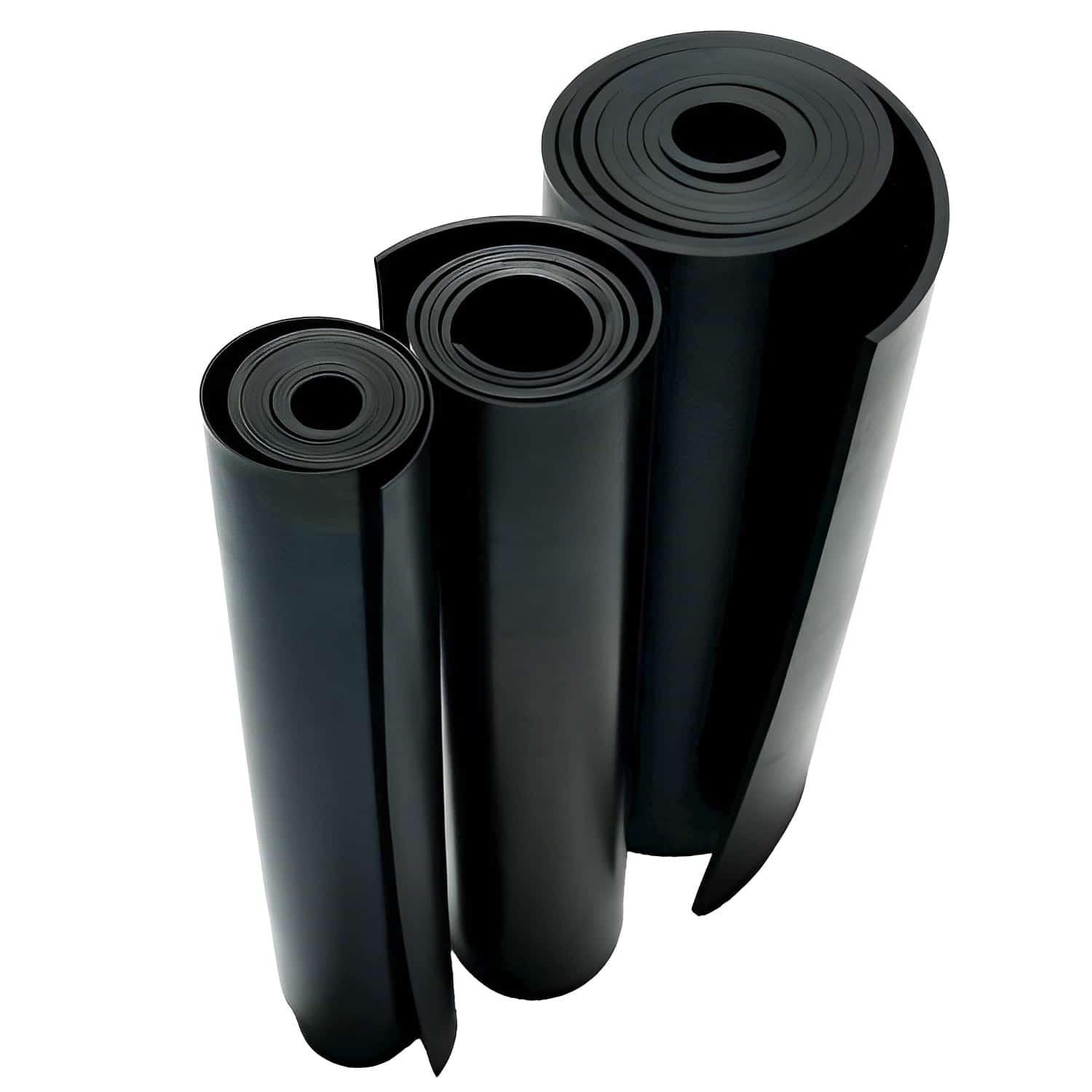
Six product lines, one sheet and mat range
The company website home page lists six product lines: FKM Rubber, Silicone Rubber, TPE Flooring, Pulley Lagging, Cow Mattress and PVC Curtain. Each line has its own page on this site, and each page stays at category level, because product detail pages were not opened during the research for this site and no specification has been verified for publication.
A buyer who starts from the product lines rather than from a single item can compare the range first and then narrow the inquiry.
Where rubber sheets and mats are used
The company website describes rubber sheets as used to seal, cushion and protect machinery and equipment in a variety of industries. That single sentence covers a wide spread of workshop and plant settings, where a sheet may sit between surfaces, under equipment, or along a working area, and where the buyer usually knows the setting long before choosing a material.
Agriculture is a second setting named on the company website, where rubber is used to improve the living environment of animals and improve comfort. Public spaces form a third setting, where rubber flooring is described as the most economical flooring solution for public spaces and easy to clean. Mining is a fourth, where rubber is used to protect equipment from corrosion and wear and to increase the safety of mining operations.
Choosing by setting before choosing by material
A practical way to use this site is to start from the setting and work backwards. A sheet that will sit on a workshop floor faces different demands from a sheet that will line a chute, cover a pulley, or lie in an animal stall, even when the sheets look alike in a photograph. The application guides on this site follow that order, setting first, material second, so that a buyer can see which questions matter for each setting.
Material comparison pages take the same approach. They explain how the named material families differ in general terms and point the remaining questions to an inquiry, rather than presenting an unverified specification table as if it had been measured.
What this site does not publish
This site does not publish product specifications, because the underlying product detail pages were not opened and no specification was verified. Thickness, hardness, material proportions and similar figures are therefore not stated anywhere on these pages, and any figure a buyer needs should be confirmed with the supplier before placing an order. The same restraint applies to certificates, which are covered only by the sentence that certificates are available upon request.
Factory and production claims are also left out. The only company image used with a factual caption on this site is the company gate exterior, captioned exactly as what it shows. Photographs of stacked sheets, rolls and flooring are captioned as the pictures themselves, not as evidence about a workshop or a warehouse that the pictures do not show.
How to send a useful inquiry
An inquiry that gets a useful answer usually names four things: the product line, the setting, the size or shape the buyer has in mind, and the conditions the sheet or mat will face. The inquiry page on this site asks for a name, an email address and a message, and the buyer can put all four points into the message in plain language. There is no need to use trade jargon to be understood.
Two sentences belong in every order conversation on this site, and they are printed on the inquiry page itself. Please confirm the minimum order quantity with the supplier before placing an order. Please confirm the lead time with the supplier before placing an order. Those two confirmations protect both sides, because neither figure is published here.
A note on pictures and evidence on this site
Every picture on this site is captioned as the picture itself, not as proof of something the picture does not show. The company gate picture is captioned as a gate exterior, because that is what it shows. The stacked sheets paired with the cow mattress line are captioned as stacked sheets, because the picture shows no animal, no stall, and no mattress in use. The automotive workshop picture is captioned as a general scene, because it is a general scene from an article, not a picture of this company's factory or products. A buyer who reads captions this way will not be misled by a picture, and a buyer who wants evidence about a workshop, a warehouse, or a product in use should ask the supplier for it directly, in an inquiry, rather than treating a website picture as that evidence.
The same rule applies to words. Company positioning, product line names, and contact details on this site come from the company website home page and the Alibaba company profile, and the pages say so where it matters. Where those two sources disagree, as they do on founding dates, both statements are printed side by side with their sources, instead of one being chosen silently. Where a source was only partly visible, as with the market figures, only the visible part is printed. Those choices make the site shorter than a site that invents detail, but they make every sentence on it defensible.
How the pages on this site fit together
The site is organised by job, not by material alone. Product pages describe the six lines on the company website home page. Index pages gather the sheet lines and the mat and flooring lines, so that a buyer can compare within a family before narrowing to a line. Application guides take a setting, such as mining, agriculture, a public space, or a workshop, and work through the facts a buyer should describe for that setting. Selection guides take a single line and work through the facts that decide a choice within it. Inquiry pages take a subject that can only be settled with the supplier, such as quantity, timing, certificates, samples, or customisation, and explain how to ask about it well.
A buyer can therefore enter the site at any point and still reach an inquiry that makes sense. A buyer who starts from a product line will find the settings it belongs to. A buyer who starts from a setting will find the lines discussed for it. A buyer who starts from a question about quantity or certificates will find the inquiry page that covers it. Every route ends at the same place, which is a written message to the supplier that names the line or the setting, the size or area, the conditions, and the confirmations needed, because that message is the document on which an order should rest.
Product lines
FKM Rubber
A sheet line on the company website home page, presented at category level. The page explains the line as presented, the settings buyers discuss for it, and the specification questions to put in an inquiry, because no detail page for this line was opened.
Silicone Rubber
A sheet line on the company website home page, presented at category level. The page works from the job the sheet must do and the setting it will face, and it compares this line with FKM rubber in general terms, without an unverified property table.
TPE Flooring
A flooring line on the company website home page. The page starts from the floor area, its traffic, and how it will be cleaned, because those facts shape a flooring answer more than a pattern photograph does.
Pulley Lagging
A lagging line on the company website home page. The page starts from the pulley and the belt working together, because lagging is chosen for that combination, and it lists the fitting and timing questions to raise early.
Cow Mattress
A mattress line on the company website home page. The page carries the picture caution for this line plainly: the paired picture shows stacked sheets, not a mattress in use, and the stall facts a buyer should describe are set out instead.
PVC Curtain
A curtain line on the company website home page. The page starts from the doorway opening, its traffic, and its hanging arrangement, because a curtain is chosen for an opening, not for a colour in a photograph.
Guides and inquiry pages
Choosing sheet material
Start from setting and job, compare lines in general terms, and confirm the specification with the supplier.
Material comparison
FKM, silicone, and EPDM families compared by job and setting, without an unverified property table.
Ribbed sheet
Anti-slip floors: describe the floor, its traffic, and its cleaning before choosing a pattern.
Mining
Protecting equipment from corrosion and wear, with lining and skirtboard subjects as guide topics.
Automotive
Following the company website article title, in general terms, with place and job named first.
Agriculture
Stall and barn questions, in the company website's general terms about animal comfort.
Flooring installation
Preparation, joining, edging, and cleaning questions to raise before ordering a floor.
Public spaces
Economical flooring that is easy to clean, judged by traffic, dirt, and cleaning method.
Machinery protection
Sealing, cushioning, and protecting machinery, described by job, surface, and conditions.
Cow mattress guide
Stall facts first, with the picture caution for this line stated plainly.
PVC curtain guide
Opening size, traffic, temperature, and hanging arrangement, in that order.
Pulley lagging guide
Pulley, belt, and conditions, with fitting and timing questions raised early.
TPE flooring guide
Area, traffic, cleaning, and form, for a floor that must be lived with after laying.
Lining guide
Wear-resistant lining inside equipment, described by equipment, place, and surface.
Skirtboard guide
Containing material on a belt, described by conveyor section and material carried.
Custom cut
Describing a cut size and shape, and asking whether it can be supplied for a named line.
Samples
Asking for a sample of the exact item and setting, judged by a stated method.
Certificates
Only the sentence that certificates are available upon request, and how to ask for one tied to a use.
Quantity and timing
Both confirmed with the supplier before ordering, in writing, for the exact item described.
Export markets
Only the regions listed on the Alibaba profile, with no completed percentages and no invented country list.
Customisation
Shop record options treated as inquiry subjects, with every change confirmed for a named line.
Industrial buying guide
A buying sequence: jobs, sizes, quantities, and a written confirmation checked before payment.
Agricultural buying guide
A buying sequence by area: stalls, walkways, and barn floors, each described separately.
FAQ
Short answers that all point to an inquiry, where the supplier confirms the detail for an exact item.
Send an inquiry about rubber sheets and mats
Describe the sheet or mat you need, the setting it will be used in, and the questions you need answered before ordering.
Send an inquiry Contact detailsCertificates available upon request. Please confirm the specifications you need with the supplier before placing an order.